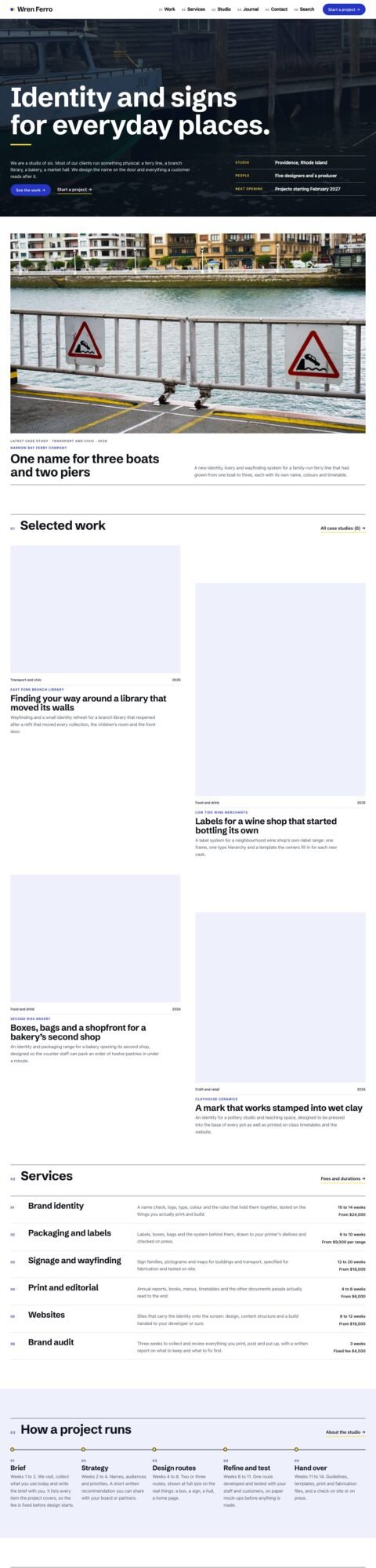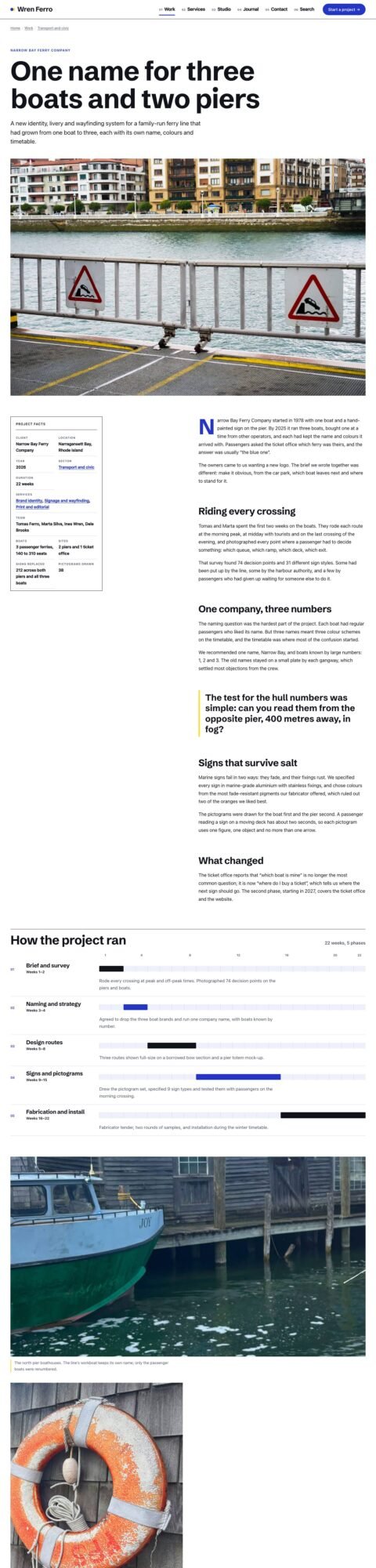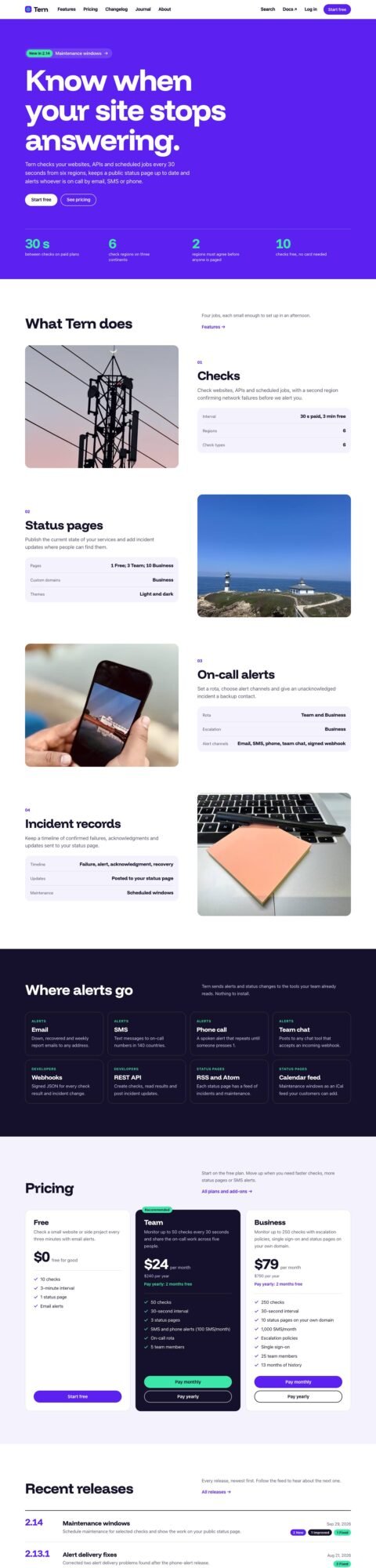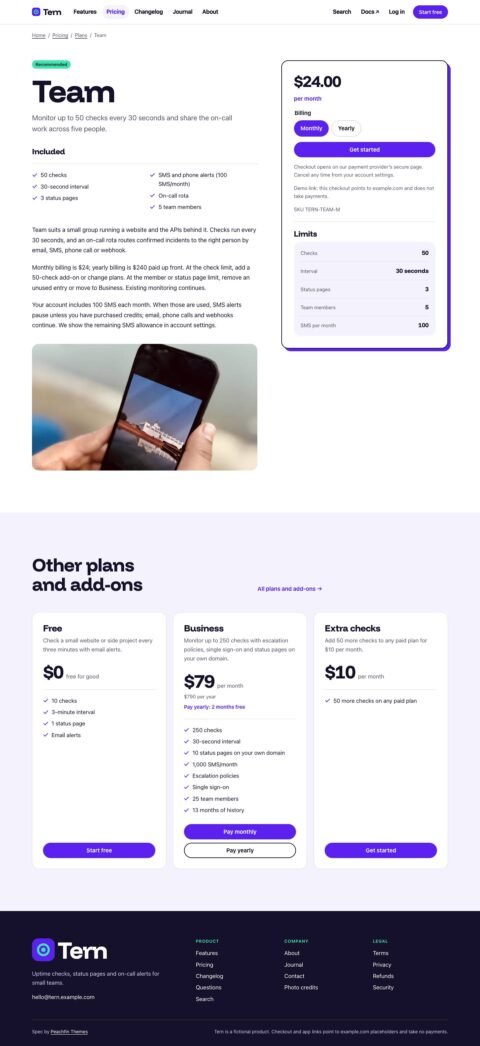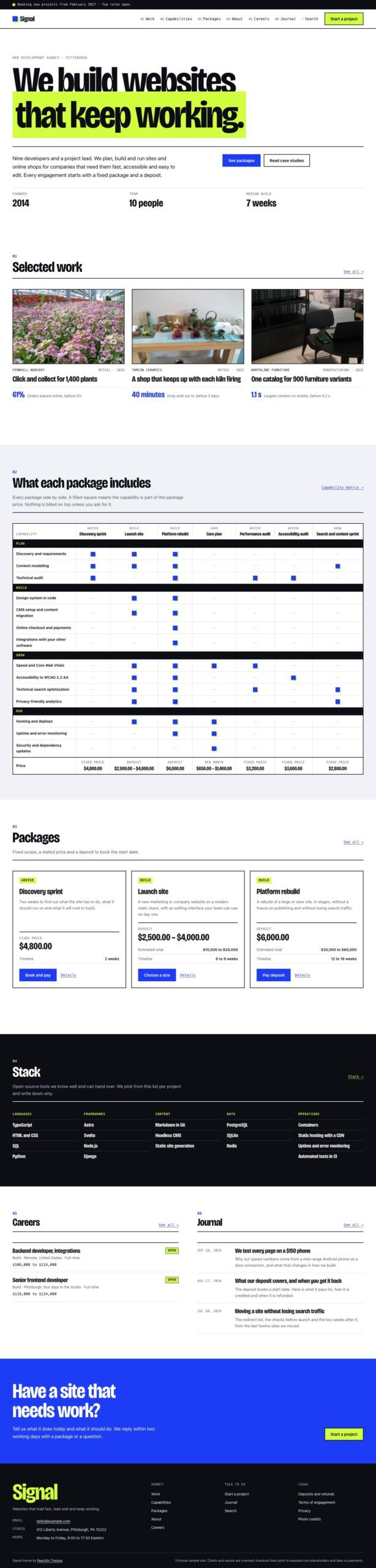
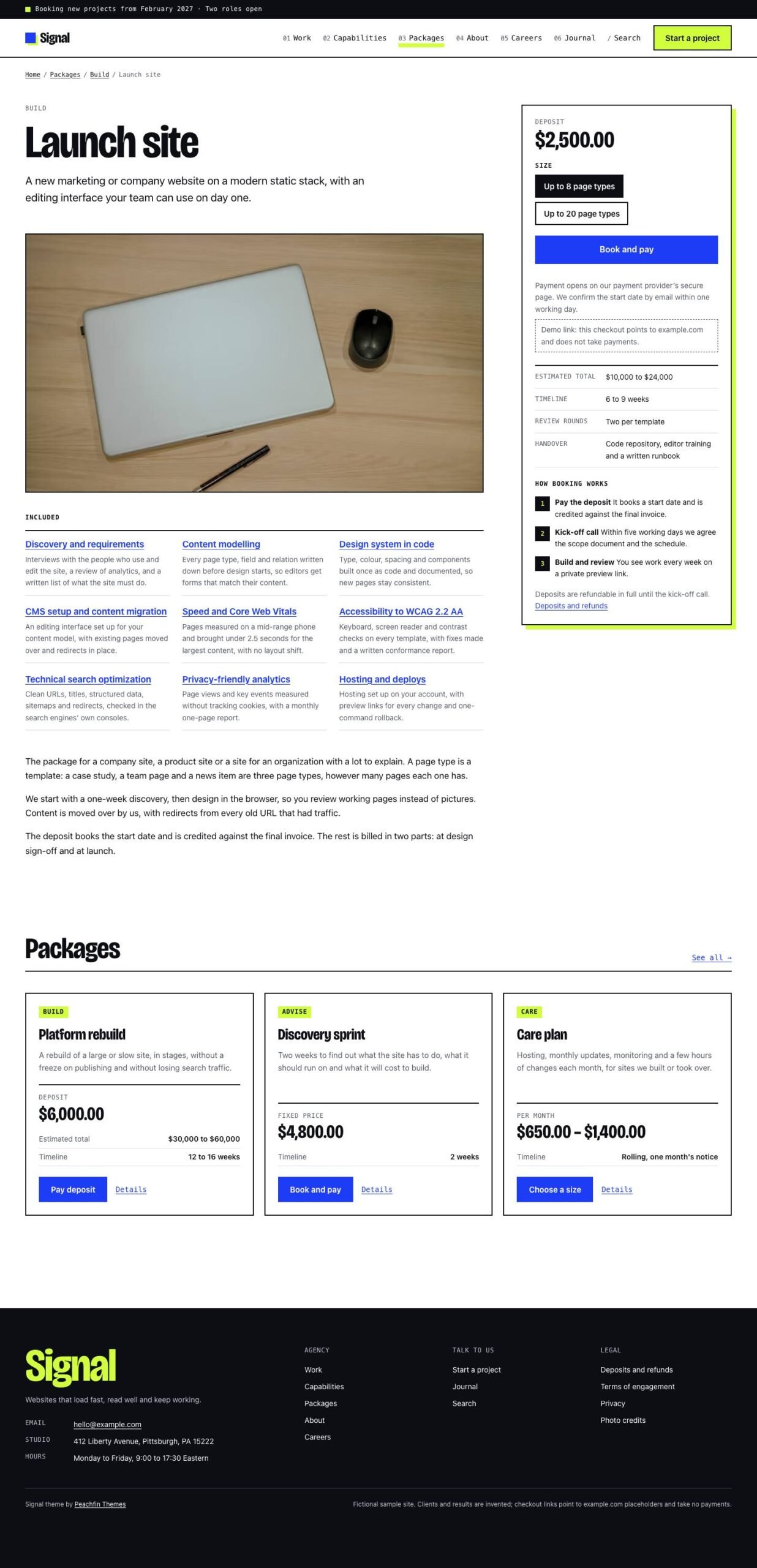
Signal is a $47 USD one-time Astro site template for development, marketing and consulting agencies. The demo uses a fictional ten-person web development agency in Pittsburgh as example content you replace. A large statement opens the home page, followed by case studies, package comparisons, service prices, your technology stack, open roles and journal entries. Condensed headings, numbered sections, square frames and blue and green accents give these sections a consistent structure.
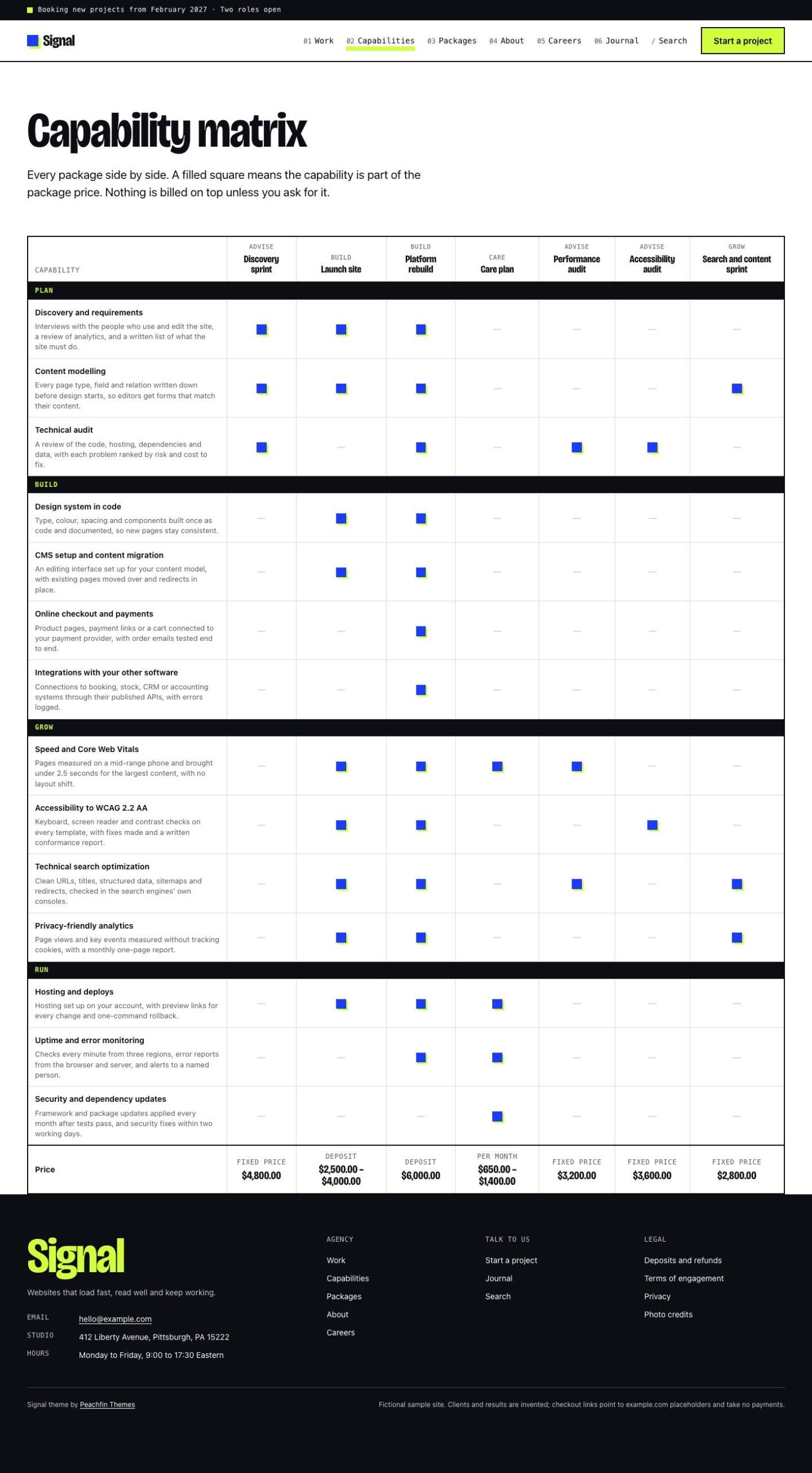
The signature capability matrix puts grouped capabilities in rows and packages in columns, with inclusion markers and a price row. It uses a plain HTML table without JavaScript and scrolls within its own frame on phones while keeping the first column visible. Case study pages pair the project story with results and the capabilities used. Extras can be switched off in src/site.config.ts: matrix.enabled removes the matrix page, home section and menu link, while commerce.enabled removes packages and payment features and presents capabilities as a grouped list.
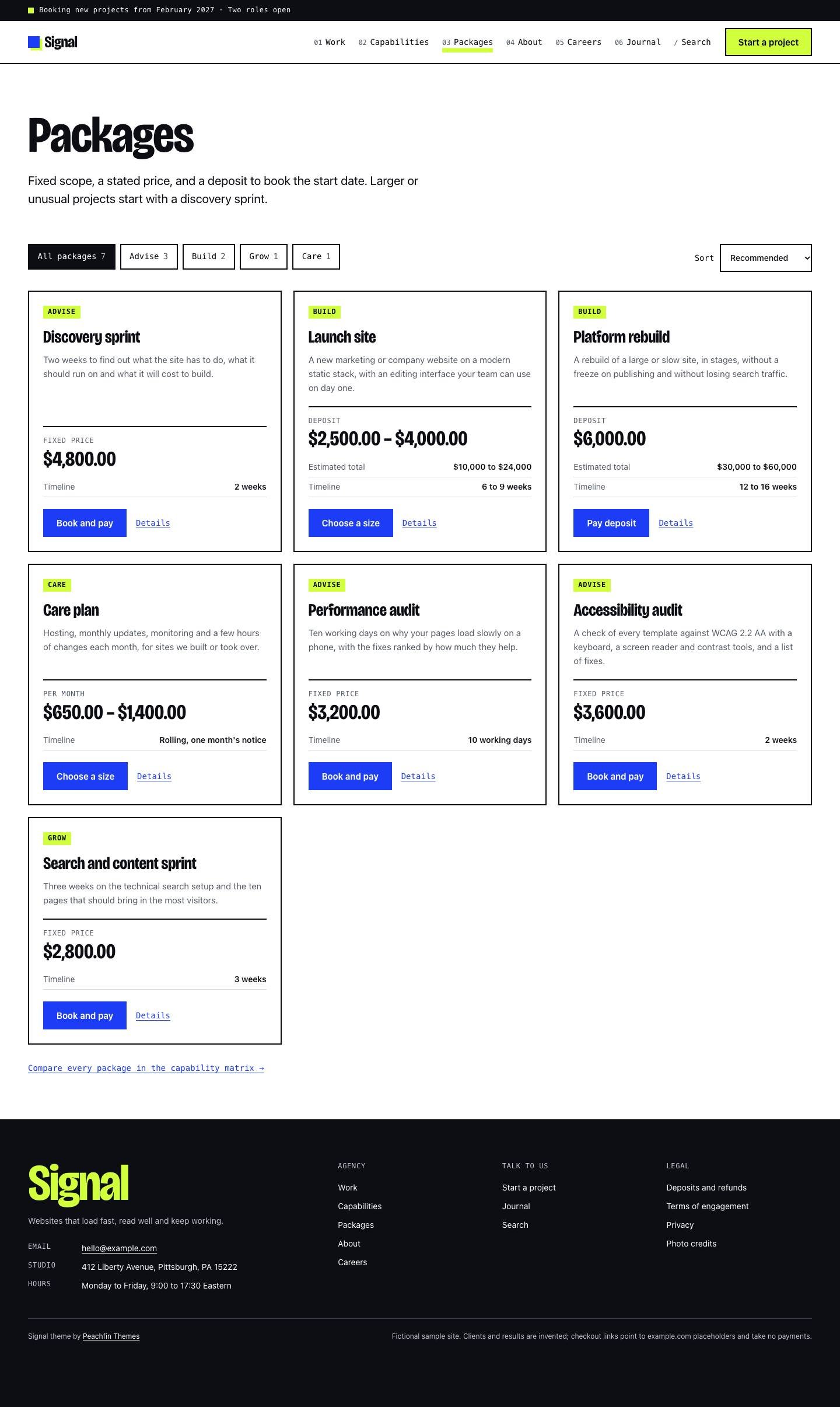
For agencies selling packages, each package product or variant can carry a checkout link from Stripe Payment Links, Polar, Lemon Squeezy or Shopify. Your payment provider handles the payment and order record. Packages can display a deposit with an estimated total, a fixed price or a monthly fee. The optional Stripe Checkout cart needs a server adapter and your own Stripe secret key; Signal’s cart was tested with mocked Stripe only. The project enquiry form posts to a configurable HTTPS endpoint that you set up with a form service. Without that endpoint, the Contact page offers a prefilled email link; the theme itself does not store or send messages.
Edit the default content in Markdown and manage identity, navigation, wording and appearance in src/site.config.ts. CUSTOMIZE.md and AGENTS.md guide customization and edits with any coding agent. For the optional EmDash edition, switch with npm run emdash:setup on Node.js or Cloudflare, then edit menus and site settings in EmDash. Replace the fictional clients, results, people and roles, and rewrite the sample deposits, terms and privacy pages before publishing.